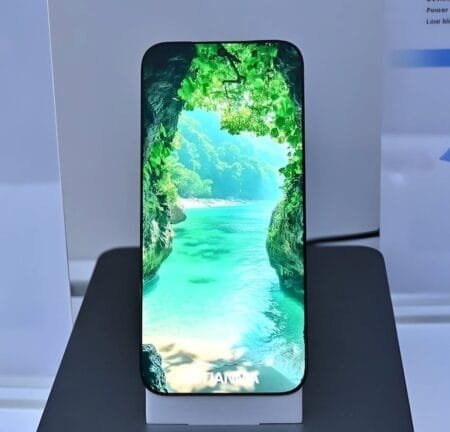

Digital Chat Station, a well-known leaker/tipster in China, shared the news on Weibo, claiming that local display makers such as CSOT, Tianma, BOE, and Visionox are testing smartphone panels with a 240Hz refresh rate. Some of these displays could reach 2K resolution at 240Hz, and the tipster expects them to appear in the next generation of flagship phones.
Most flagship smartphones currently use displays with refresh rates of up to 185Hz, so moving to 240Hz could make scrolling, animations, and supported games feel smoother. While 240Hz smartphone displays are still relatively new, the recently released [Sharp AQUOS sense11] already features a 6.2-inch IGZO OLED display with an adaptive refresh rate ranging from 1Hz to 240Hz, paired with a 5,000mAh battery. Still, this latest report specifically concerns Chinese display makers testing new panels, and none of the companies involved have officially confirmed the development.
The report also got people asking if 240Hz is really needed on phones. One person commented on the post, “Is 240 really necessary? It seems pointless except for increasing power consumption.” This is a fair point. Higher refresh rates do use more battery, and a lot of users cannot even tell the difference between 120Hz and 240Hz when they are just using their phone normally.
Our Comment
A 240Hz display sounds impressive on paper, especially for mobile gaming, but battery life remains more important for most smartphone users. A higher refresh rate could increase power consumption, particularly if manufacturers don’t make improvements to display efficiency or battery capacity.
The Sharp AQUOS sense11 is one example of how a high-refresh-rate display can be paired with a large battery, although real-world battery life still depends on more than just battery capacity and refresh rate. If manufacturers can make 240Hz panels more power-efficient without compromising battery life, it could become a worthwhile upgrade. For now, though, this remains something to watch rather than a confirmed feature of upcoming flagship phones.
Source: Chinese