
Google may have accidentally given us our first real look at its next big operating system project, and it’s a lot more than a simple Android update.
The OS is reportedly codenamed Aluminium OS (also seen as Aluminum OS in US English sources), and based on what leaked online, it looks like Google is building something that can run like a proper PC-style platform, not just on phones and tablets, but on laptops, desktops, and big-screen devices too. Think of it as Android moving closer to a ChromeOS-like experience, but under one unified system.
How the leak happened?
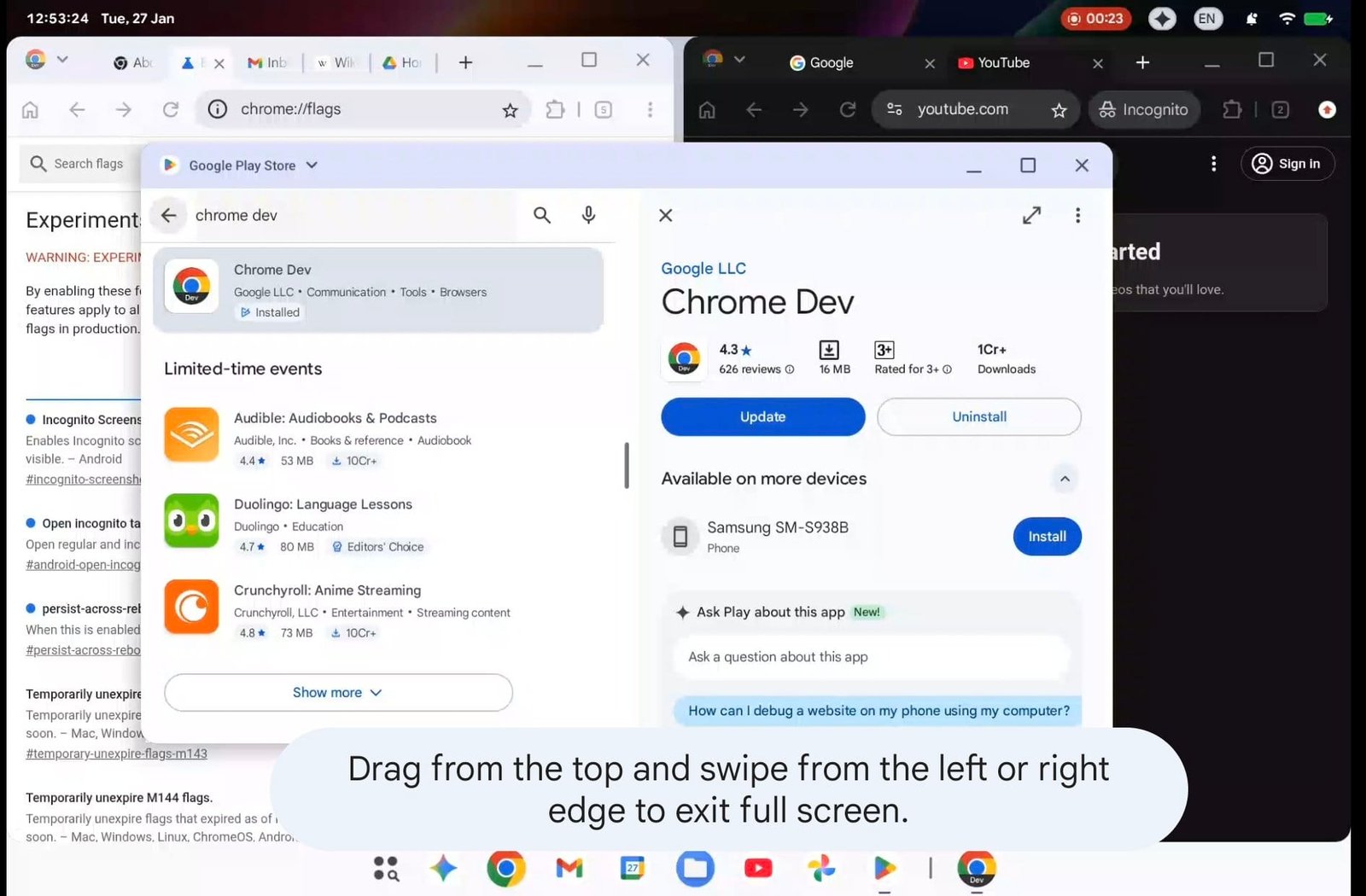
The leak appeared in late January 2026, after a bug report was posted on Google’s Issue Tracker. The report was about Chrome Incognito tabs, but the real surprise was that it included screen recordings and screenshots taken from an internal build of Aluminium OS.
Those images and clips were quickly spotted, shared around, and picked up by tech sites and social media, especially on X. Several reports say the footage shows the OS running on Chromebook hardware, including an HP Chromebook model using an Intel 12th Gen Core processor. That said, future versions are expected to also run on ARM chips, like Snapdragon, for better battery life and efficiency.
Google’s long-running plan: merge ChromeOS and Android
This isn’t something Google started last week. The company has been working toward blending ChromeOS and Android for years, with rumors and development efforts going back as far as 2015.
What’s changed recently is the momentum. Reports from late 2025 suggested Google was moving ChromeOS closer to the Android foundation, and Aluminium OS appears to be the result of that push, a single platform that can scale from phones to tablets to Chromebooks, and now more traditional PC style devices too.
The goal is simple: one codebase, less fragmentation, and a more consistent experience across devices.
What the leaked build shows
The leaked footage doesn’t look like “Android stretched to a bigger screen.” Instead, it looks like Android redesigned to behave like a desktop OS.
Here are the most noticeable features:
A real desktop taskbar
There’s a taskbar similar to what you’d expect on Windows or macOS, complete with quick access to apps and system controls. Some settings can reportedly be toggled quickly, without needing a reboot.
Proper windowed multitasking
Apps can run in resizable windows, with familiar controls like minimize/maximize/close. There’s also support for snapping windows to the side and using split-screen layouts, much closer to a laptop workflow than standard Android.
Designed for keyboard and mouse
The interface looks built around keyboard shortcuts, trackpads, and mouse input, with touch support as an extra option rather than the main focus. It feels more “PC-first” than mobile-first.
Full Android app support
Since it’s still rooted in Android, it should support the Play Store and the huge library of Android apps, just with better scaling and window support on larger screens.
Desktop Chrome with extensions
One of the biggest advantages shown in reports is that Chrome here supports full desktop extensions, like the version you’d use on Windows or macOS. That means real productivity add-ons, ad blockers, developer tools, and more, without the limitations of mobile Chrome.
What it’s likely based on (and what it won’t do)
Reports from 9to5google.com suggest Aluminium OS is built on Android 16, and there are expectations that Google will bake in more Gemini-powered features over time.
That said, nothing so far suggests it will run Windows (.exe) apps or macOS software. The focus seems to be on making Android’s ecosystem feel natural and powerful on desktop-class hardware, not replacing every legacy PC app overnight.
Why this could be a big deal?
If Aluminium OS launches the way it’s being described, it could become a serious alternative for people who mostly live in the browser, use cloud tools, or want a lighter system that still has access to tons of apps.
The potential advantages are easy to see:
- Better performance and battery life, especially on ARM laptops
- Seamless syncing across devices, from phone to laptop
- A massive app library, thanks to Android and the Play Store
- Cheaper and more secure hardware options, similar to Chromebooks
Of course, the real test will be whether developers fully optimize apps for desktop-style windows, and whether Google can convince hardware makers to build strong devices around it.
When it might launch
There’s still no official announcement from Google, but expectations point to a 2026 rollout, likely starting with Chromebook-style devices or new Android-powered laptops.
For now, the leak has given everyone a clear hint that Google isn’t just tweaking Android anymore, it’s trying to turn it into something that can genuinely compete on the desktop.
Discover more from wazzuptechph
Subscribe to get the latest posts sent to your email.