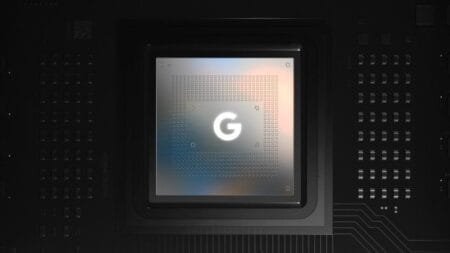
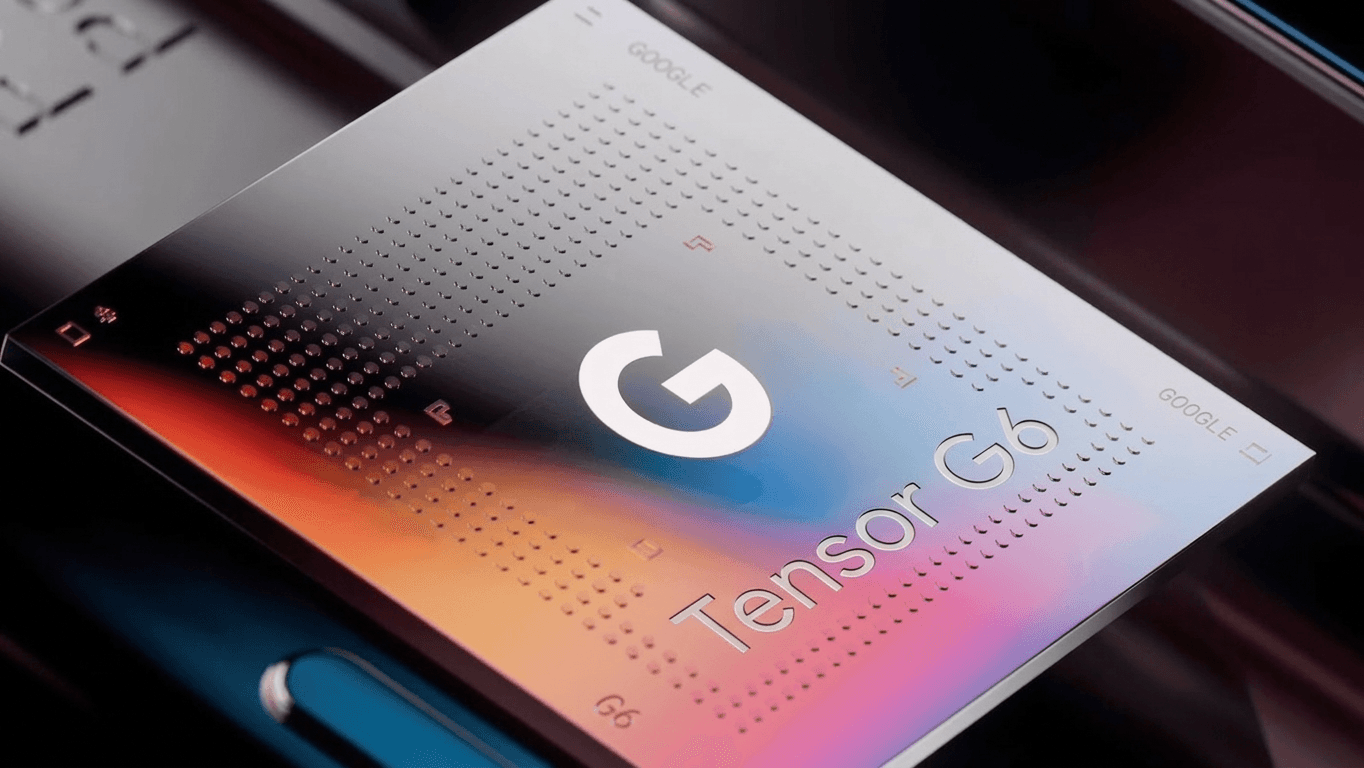
The upcoming Google Tensor G6 chipset has surfaced on Geekbench for the second time, revealing new details about its architecture and performance. The benchmark listing suggests that the next-generation Tensor chip could be manufactured using a 2nm process by TSMC and may feature a 7-core CPU configuration.
Tensor G6 CPU Configuration & Performance
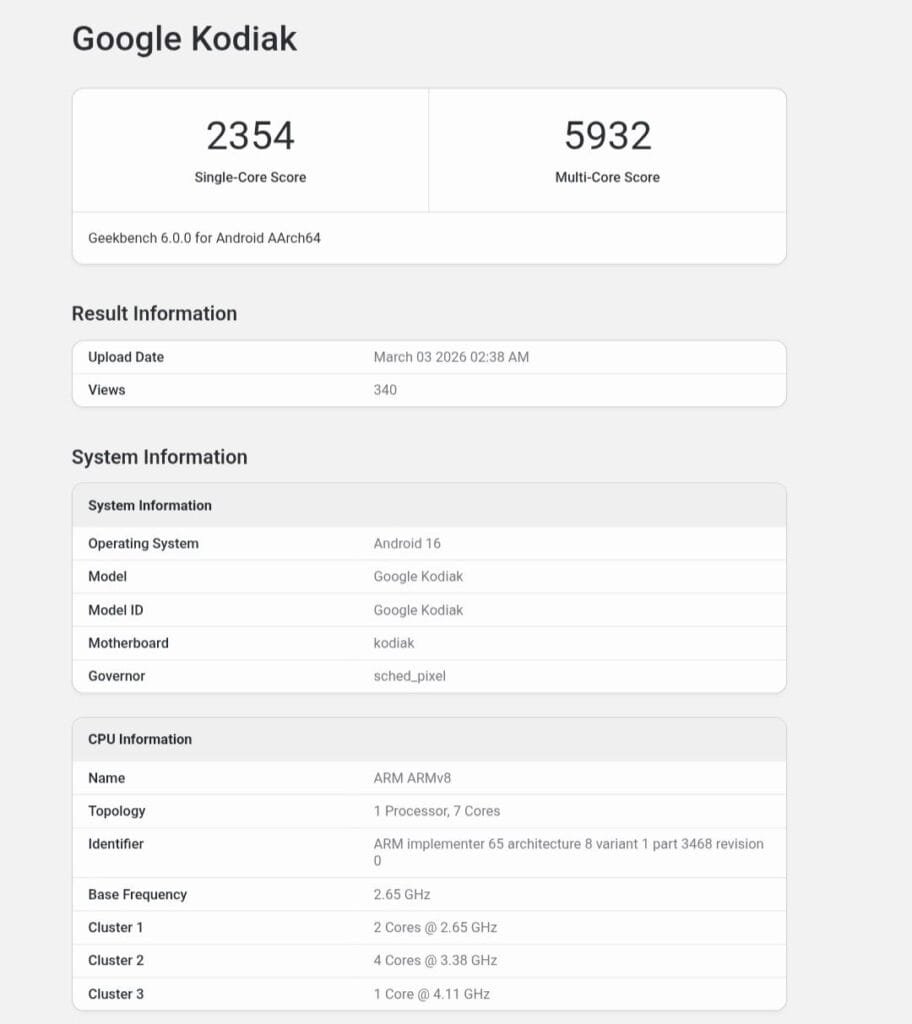
According to the Geekbench database, the processor includes a mix of high-performance and efficiency cores built on ARM’s next-generation architecture. The configuration reportedly consists of:
- 1× ARM C1-Ultra clocked at 4.11 GHz
- 4× ARM C1-Pro clocked at 3.38 GHz
- 2× ARM C1-Pro clocked at 2.65 GHz
This unusual 7-core layout differs from the typical 8-core designs seen in most flagship mobile chipsets, suggesting that Google may be experimenting with a different performance-efficiency balance for its upcoming devices.
GPU and Benchmark Scores
The listing also reveals that the chipset is paired with a PowerVR C‑Series CXTP‑48‑1536 GPU, which is expected to handle graphics processing for gaming, AI workloads, and advanced imaging features.
In terms of performance, the benchmark shows:
- Single-core score: 2,354
- Multi-core score: 5,932
Based on these results, the early performance appears very close to the current Google Tensor G5, with little difference in benchmark scores.
Early Testing Phase
It is worth noting that these results likely come from prototype hardware or early testing units, meaning the scores may not reflect the final performance of the chipset once it is officially released. Manufacturers often conduct multiple internal tests during development, and optimizations for software, power efficiency, and thermal management can significantly change the final results.
The Google Tensor G6 is expected to power future Google Pixel devices, though Google has not yet confirmed any official specifications or launch timeline.
As development continues, more benchmark listings and leaks are expected to reveal additional details about Google’s next-generation custom silicon.
Source: Geekbench
Discover more from wazzuptechph
Subscribe to get the latest posts sent to your email.