
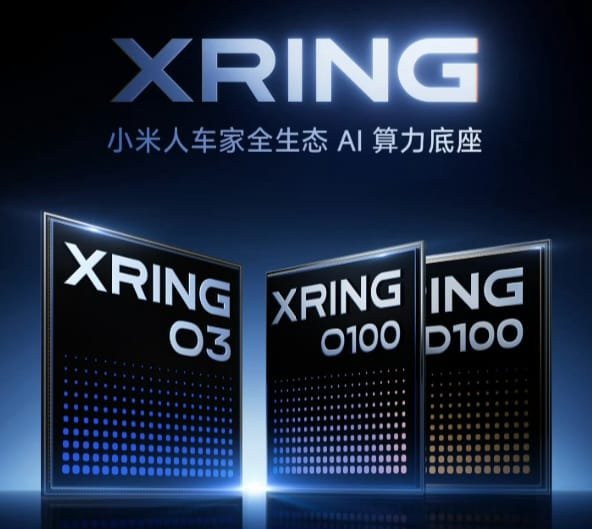
Xiaomi has officially unveiled the wraps off three new custom chipsets under its Xring brand, making addedof the company’s in-house silicon lineup. The announcement covers the flagship Xring O3 mobile processor, the AI focused Xring O100, and the intelligent driving Xring D100, with the first consumer devices powered by the Xring O3 set to arrive as early as September.
The Xring O3 leads the pack as Xiaomi’s new top tier system on chip built on a 3 nanometer process. Its CPU uses a 10 core all big core design that delivers a 60 percent jump in peak performance over the previous generation. Earlier rumors had the prime core clocked at 4.05GHz, but official numbers now show it runs up to 4.35 GHz, split between six ultra large cores and four large cores. In benchmark testing, it scores 3,945 points in single core performance and 15,221 points in multi core, making it the first mobile chip to break the 15,000 point multi core barrier.
- 6 Ultra-Large Cores + 4 Large Cores
- Max Clock Speed: 4.35 GHz
- Dual SME2 Acceleration Units
- Single-Core Score: 3,945
- Multi-Core Score: 15,221
- Peak Performance Increase: 60%
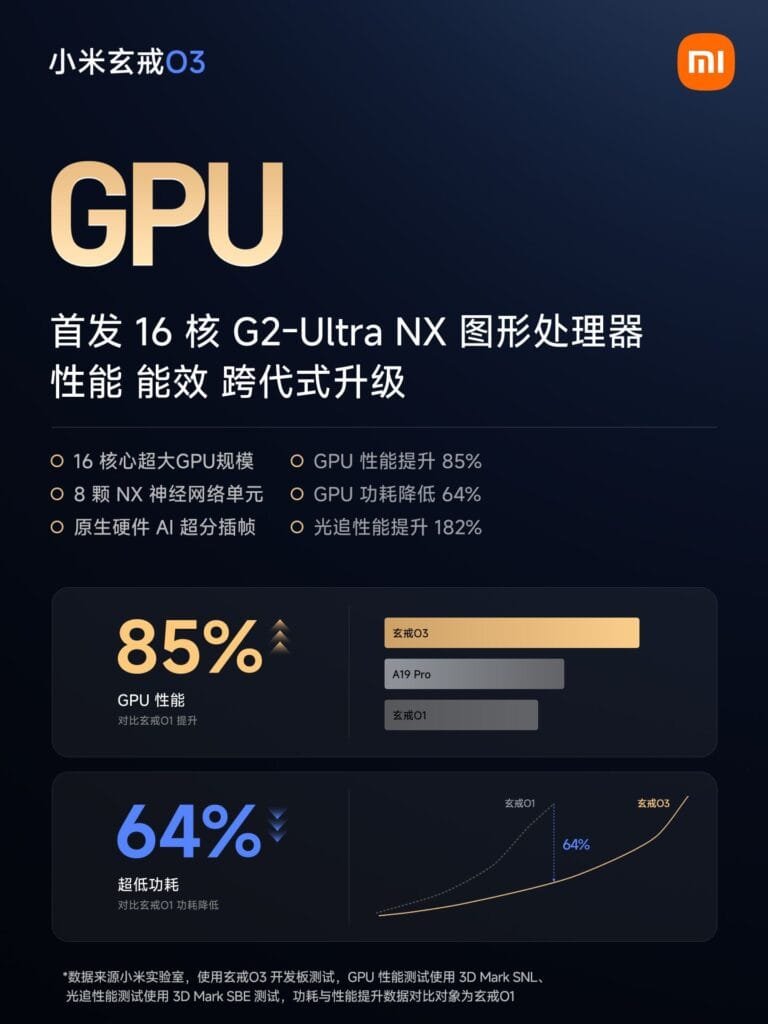
On the graphics side, the Xring O3 packs a 16 core G2 Ultra NX GPU that brings an 85 percent performance boost, while power efficiency improves by 64 percent. It also claims the title of first mobile chip to support LPDDR6 memory, hitting up to 113.8 gigabytes per second of memory bandwidth. AI capabilities get a substantial lift too, with 200 TOPS of tensor performance and 3.13 TFLOPS of vector performance, a 45 percent gain over the last model. AI acceleration is spread across the CPU, GPU, ISP, DPU, and ADSP, with static latency sitting at just 82 nanoseconds.
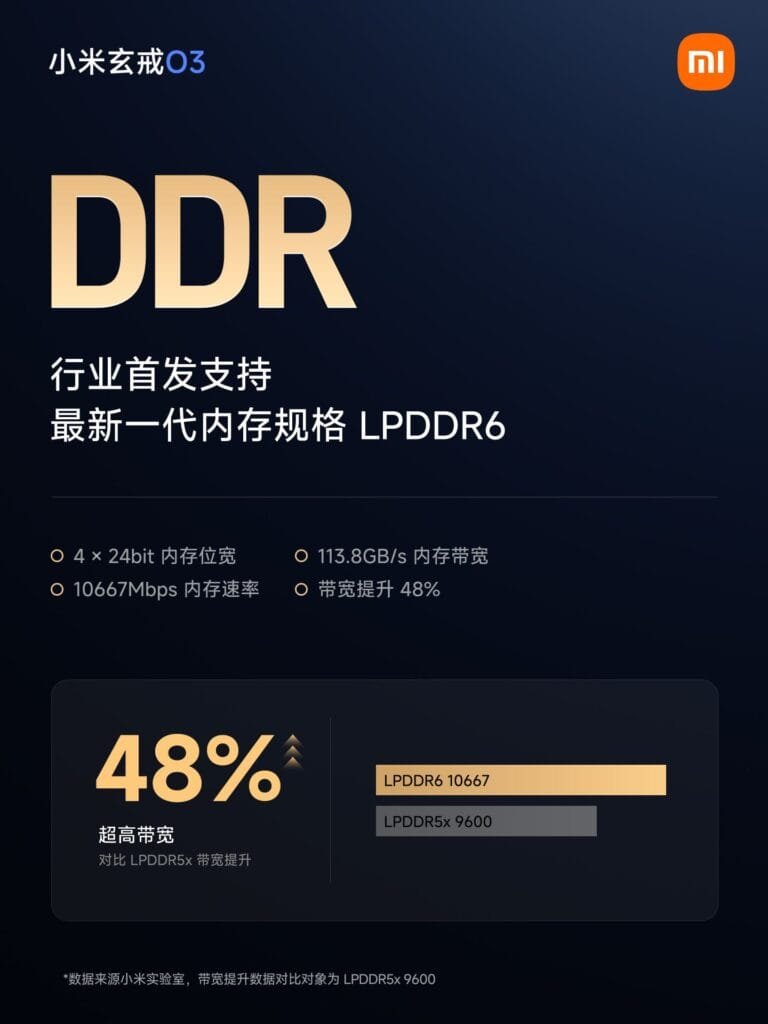
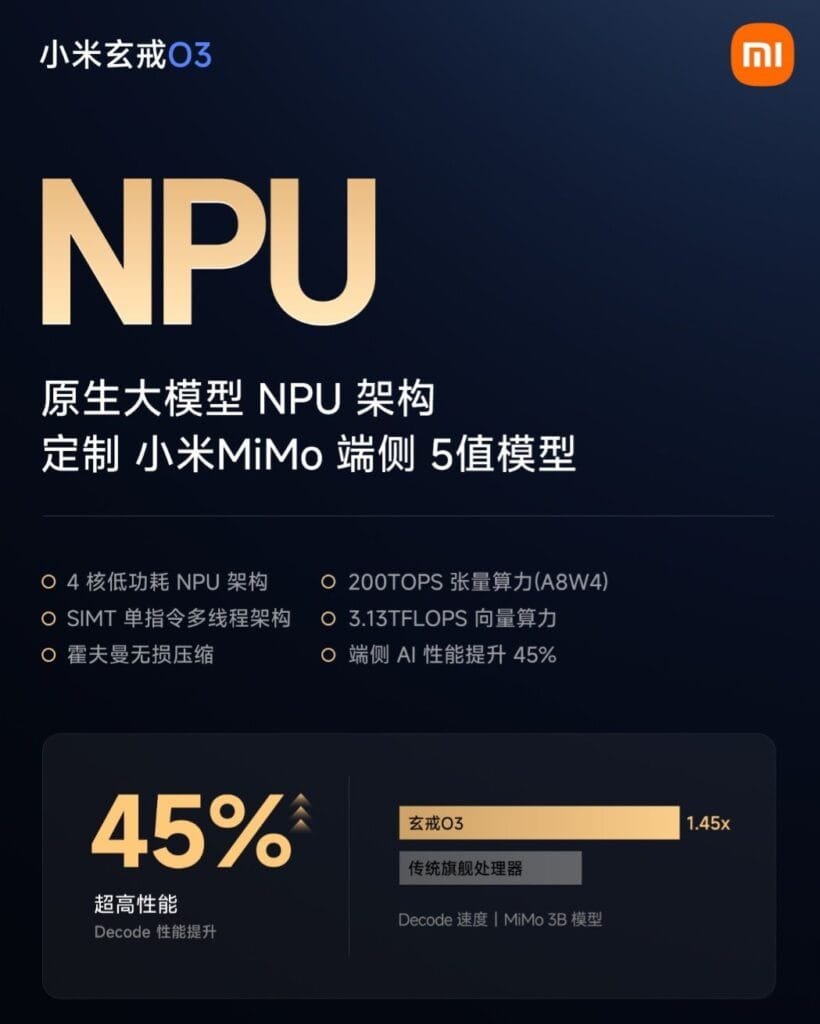
Xiaomi says the chip took 459 days to develop, and it scores 5.22 million points on AnTuTu, claiming to be the first mobile chip to cross the 5 million points on the popular benchmark. The brand confirmed the Xring O3 will make its debut in the Xiaomi 18 Fold and Xiaomi Pad 9 Pro Max, both scheduled to launch in September.
| Xiaomi Xring O3 Specifications | |
|---|---|
| Process | TSMC 3nm Flagship Process |
| CPU Configuration | 10-Core All-Big Core. 6 Ultra-Large Cores plus 4 Large Cores |
| Max Clock Speed | 4.35 GHz |
| Geekbench 6.5 Single-Core | 3,945 |
| Geekbench 6.5 Multi-Core | 15,221. First mobile chip above 15,000 |
| AnTuTu V11 Score | 5.22 Million. First mobile chip above 5 million |
| Die Size | 133 mm² |
| Transistor Count | 24 Billion |
| GPU | 16-Core G2-Ultra NX. +85% performance, +64% power efficiency |
| Memory Support | LPDDR6 10667 Mbps. Industry First |
| Memory Bandwidth | 113.8 GB/s. +48% vs LPDDR5x 9600 |
| AI Performance | 200 TOPS Tensor, 3.13 TFLOPS Vector. +45% vs Xring O1 |
| Static Latency | 82ns |
| Imaging ISP. Camera | 5th-Gen. Up to 432MP capture, 4K60fps night video, 24-bit processing, dual-depth hardware engine |
| Display Processing Unit | Advanced tone mapping, PreLTM module for better HDR |
| Video Codec Engine | H.266 hardware decode, 20% faster processing |
| Security Engine | Xring RISC-V security core, EAL5+ certified |
| Development Time | 459 Days |
| First Devices | Xiaomi 18 Fold, Xiaomi Pad 9 Pro Max. September 2026 |
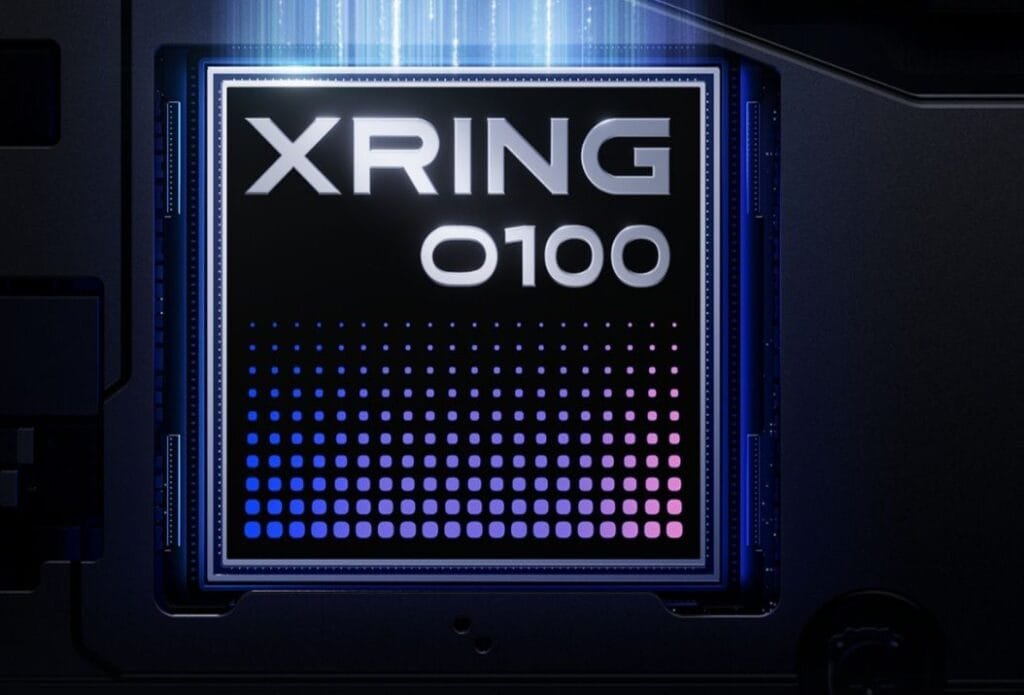
The second chip unveiled, the Xring O100, is built on a 6 nanometer process and designed around an advanced near memory AI architecture. Its goal is to break through the so called memory wall that limits AI performance by stacking chips and memory vertically, connected through millions of high speed vertical channels. This setup delivers 1.22 terabits per second of bandwidth, optimized specifically for on device AI tasks. Xiaomi says the O100 is versatile enough to power not just smartphones, but also cars and robots.
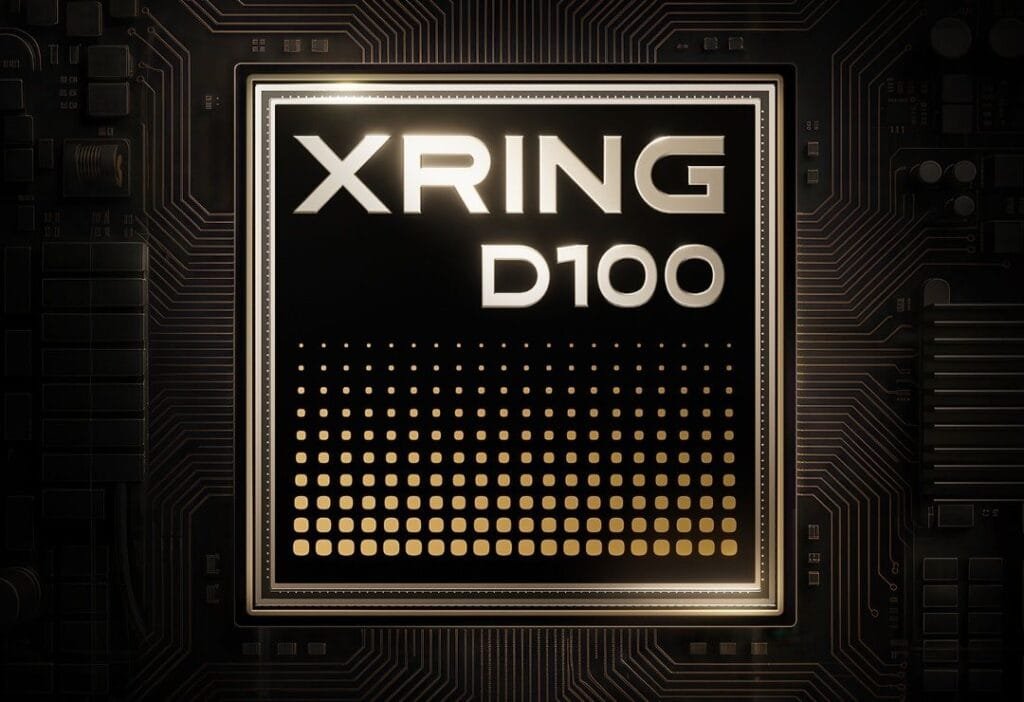
Rounding out the lineup is the Xring D100, Xiaomi’s first domestically built 3 nanometer intelligent driving AI chip. It features a 20 core high performance CPU and a 16 core high compute NPU, with support for up to 160 gigabytes of unified memory. It is capable of running AI models with up to 200 billion parameters locally, right on the device itself. Development on the D100 is already complete, and Xiaomi plans a commercial launch for the chip in 2027.
These three new chips show Xiaomi is serious about relying less on outside suppliers and building its own silicon lineup for phones, cars, robots, and more.
Source: Xiaomi official Weibo page
Discover more from Wazzuptechph
Subscribe to get the latest posts sent to your email.