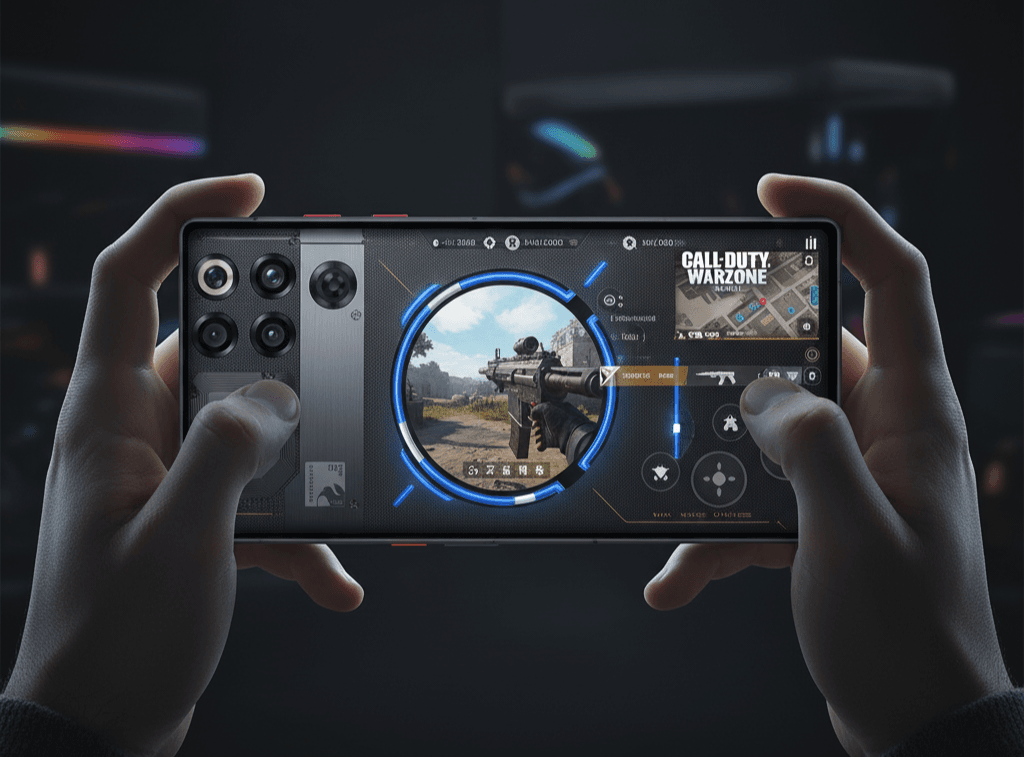
Mobile gaming has evolved far beyond simple 2D games like Snake and Tetris. Modern titles such as Genshin Impact, Call of Duty: Warzone, and Honkai: Star Rail rival console games with their stunning visuals and complex game worlds. This dramatic shift has made the hardware inside our smartphones more critical than ever, with the Graphics Processing Unit (GPU) at the center of the action.
But just how important is a powerful GPU for your mobile gaming experience? Does the latest and greatest chip from Qualcomm or Apple really make a noticeable difference? This comprehensive guide will explain the role of the GPU, compare it to the CPU, and help you understand what to prioritize when choosing a phone for gaming.
The Foundation: What Is a GPU?
Before we can understand its importance, we need to clarify what a GPU is. The Graphics Processing Unit is a specialized processor, originally designed to handle the complex mathematical calculations required to render graphics. While a Central Processing Unit (CPU) is a versatile “jack-of-all-trades” designed for sequential tasks, a GPU has thousands of smaller, more specialized cores that work in parallel.
This parallel architecture makes the GPU incredibly efficient at tasks that involve processing large blocks of data simultaneously, such as rendering millions of pixels to create a 3D image or calculating the movement of textures.
In the world of mobile devices, the GPU is not a separate component like it is in a PC. Instead, it is a crucial part of the System-on-a-Chip (SoC) that also houses the CPU, RAM, and other components. This tight integration is why mobile GPU efficiency and thermal performance are so critical.
The Role of the GPU in Mobile Gaming
A higher-end GPU dramatically improves your mobile gaming experience in several key ways:
Graphics Rendering and Visual Fidelity
This is the GPU’s most well-known role. A more powerful GPU can handle more complex and realistic visuals. This includes everything from high-resolution textures and complex lighting to advanced anti-aliasing and particle effects like realistic explosions or weather. For graphically-intensive titles, a better GPU directly translates to a more beautiful and immersive game world.
Frame Rate (FPS)
Frame rate, measured in frames per second (FPS), is the number of individual images your phone can display each second. A higher frame rate results in smoother, more responsive gameplay. If you’re a competitive gamer, this can be the difference between a headshot and a miss. An anemic GPU will cause frame drops and stuttering, especially during intense action sequences, while a powerful one can deliver a stable 60, 90, or even 120 FPS.
Higher Resolution and Graphics Settings
A more powerful GPU allows you to push the boundaries of visual quality. If your phone has a high-resolution display, a high-end GPU is what enables you to enjoy it without a performance penalty. It also allows you to crank up the graphics settings within a game, unlocking visual effects that would be impossible on a mid-range or budget device.
Efficient Power Consumption and Thermal Management
This is a less obvious but equally important benefit. Modern, high-end mobile GPUs are designed to deliver a massive amount of performance within a tight power envelope. While they might draw more power than a budget chip, they can complete the same tasks much faster and more efficiently. This reduces the amount of time the processor is under a heavy load, which in turn reduces heat generation and saves battery life during gaming. A less efficient GPU, by contrast, might struggle and overheat, leading to performance throttling and rapid battery drain.
Advanced Features
High-end mobile GPUs are at the forefront of new technologies. Features like hardware-accelerated ray tracing, AI-driven upscaling (like Qualcomm’s Snapdragon Game Super Resolution), and Variable Rate Shading (VRS) are only available on the latest and most advanced GPUs. These features are key to delivering a “console-quality” experience on a handheld device.
GPU vs. CPU in Mobile Gaming: A Balanced View
While the GPU is the superstar for visuals, the CPU also plays a critical supporting role. It’s not a GPU-vs-CPU battle, but rather a teamwork exercise.
- What the CPU does: The CPU handles the game’s core logic, including AI behavior, physics calculations, and processing player inputs. It also manages background applications, ensuring they don’t interfere with your gameplay.
- The “Bottleneck” effect: If you have an extremely powerful GPU paired with a weak CPU, the CPU can become a “bottleneck”. The GPU would have to wait for instructions from the slower CPU, leading to inefficient performance.
- The mobile advantage: Modern System-on-a-Chip (SoC) designs are engineered for a delicate balance. High-end processors from Qualcomm (Snapdragon 8-series), Apple (A-series), and MediaTek (Dimensity) are carefully designed so that the CPU and GPU work in harmony.
For the Casual vs. Hardcore Mobile Gamer
The importance of a high-end GPU largely depends on the kind of games you play.
Casual Gamers
If you primarily play puzzle games, simple strategy games, or social games, a high-end GPU is an unnecessary expense. Most mid-range smartphones today, powered by chips like the MediaTek Dimensity 7000-series or Qualcomm Snapdragon 7-series, are more than capable of handling these titles smoothly. Your money would be better spent on other features, such as battery life or camera quality.
Competitive and Hardcore Gamers
If you play demanding, high-fidelity games like Genshin Impact, Fortnite, Call of Duty Mobile, or PUBG Mobile with the highest settings, a top-tier GPU is a must-have. These games push a phone’s hardware to its limit. For these users, a flagship device with a powerful GPU is essential to achieve the highest frame rates, minimize input lag, and gain a competitive edge.
What to Look For When Buying a Gaming Phone
When purchasing a smartphone with gaming in mind, go beyond marketing claims and consider these factors:
- High-End Processor Series: Look for devices with the latest flagship SoCs, such as the Qualcomm Snapdragon 8-series, Apple’s A-series, or the top-tier MediaTek Dimensity chips. These processors come with the most advanced mobile GPUs.
- Ample RAM: While the GPU renders the graphics, sufficient RAM (8GB or more is recommended) is needed for smooth multitasking and loading large game worlds.
- Display Refresh Rate: A powerful GPU is wasted if your phone’s display can’t keep up. Look for a phone with a high refresh rate screen (90Hz, 120Hz, or higher) to truly experience a silky-smooth frame rate.
- Effective Cooling: Mobile GPUs generate heat. Good thermal management is what allows the GPU to sustain its peak performance without throttling. Many gaming-focused phones now include advanced cooling systems.
Conclusion
So, is a high-end GPU important for mobile gaming? Absolutely, but only if you are playing graphically demanding, high-fidelity games. For the hardcore mobile gamer, it is arguably the single most important hardware component, dictating visual fidelity, frame rate, and overall performance.
For the casual gamer, the advancements in today’s mid-range processors mean you don’t need a flagship device to enjoy a wide variety of mobile games. Ultimately, the right choice for you depends on your gaming habits. Understanding the role of the GPU allows you to make an informed decision, ensuring you get the best value for your gaming needs, whether you are aiming for a smooth 60 FPS in an intense shooter or just a casual game of strategy.
Discover more from wazzuptechph
Subscribe to get the latest posts sent to your email.