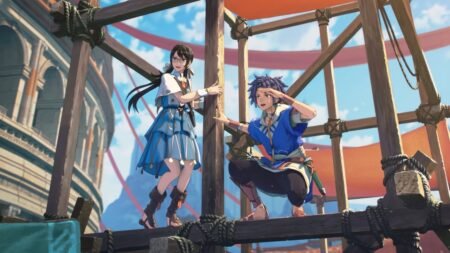

Nintendo has revealed new details about the development of Fire Emblem: Fortune’s Weave, explaining how its four protagonists, different gameplay systems, exploration, character progression, music, and story are designed around one central idea: bringing separate experiences together into a single outcome.
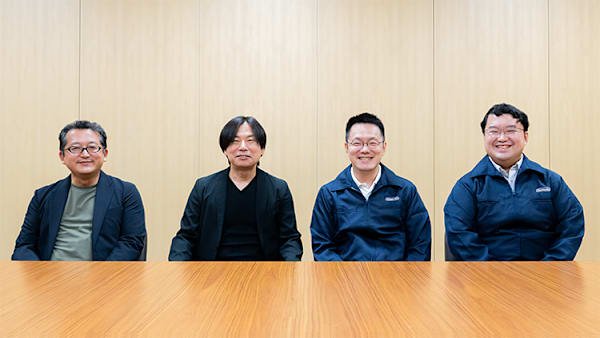
In the latest three-part Ask the Developer interview, Nintendo and Intelligent Systems discussed the creation of the Nintendo Switch 2-exclusive tactical RPG, including the game’s connection to Fire Emblem: Three Houses, its new exploration mechanics, its large cast of characters, and the thinking behind its unusual save and progression systems.
The game is set in Dagda, a continent located south of Fódlan, the setting of Fire Emblem: Three Houses. Although the two games share the same world, Nintendo says Fortune’s Weave was designed as a standalone experience rather than a direct sequel.
You can watch the full video interview below:
Four Protagonists Drive the Story
Unlike Fire Emblem: Three Houses, which revolves around three houses and their respective factions, Fortune’s Weave follows four protagonists through separate story paths.
The four protagonists are:
- Cai: A boy from the peaceful village of Ribeira who leaves home to uncover the mystery of his birth.
- Dietrich: A swordsman from Fódlan who survives a shipwreck and travels to Dagda, where he becomes involved in the Heroic Games.
- Theodora: The young queen of Saramis, who enters the Heroic Games to fulfill a long-held wish of her people.
- Leda: A bard driven by revenge after her homeland and family were destroyed.
Players can switch between their stories and eventually see the four paths converge.
The developers originally considered having eight protagonists, but reduced the number to four because they felt eight perspectives could become too complicated for players to follow.
Eshmel Was Added During Development
One of the more surprising revelations from the interview is that Eshmel, the character players control at the beginning of the game, was not part of the original plan.
Eshmel was added around the middle of development because the team felt the four separate stories needed a character who could connect them from a broader perspective.
The resulting structure has Eshmel begin the story as a savior in a world ruled by the underworld before returning to the past and helping the four protagonists who hold the key to the story.
This also introduced the game’s time-travel element. Eshmel can gather information and experiences from the past before ultimately bringing the four protagonists and their stories together.
The developers said this helped make the game’s central idea of “weaving everything together” work across both the story and gameplay.
Each Protagonist Has Different Gameplay
Another major change is the addition of larger exploration sections.
Players can freely move around Dagsion, explore the world map, visit dungeons, recruit allies, develop characters, and search for items and other discoveries.
More importantly, exploration and character development aren’t identical across the four routes.
Each protagonist has gameplay mechanics based on their personality and story:
- Cai can catch animals, ride them, care for them, build bonds with them, and work on farms.
- Dietrich can acquire and strengthen combat arts by defeating enemies.
- Theodora can recruit soldiers from settlements and deploy them as battalions.
- Leda can perform at taverns in different towns to earn rewards and discover information about secret locations.
This gives each route its own identity and makes replaying the game a different experience depending on which protagonist players follow.
Players Can Change Paths Freely
Nintendo says there is no correct order for playing the four protagonists’ stories.
Players can focus on one character or progress through several stories in parallel. If they encounter another protagonist and become interested in that character’s story, they can switch paths.
The game also avoids forcing players into irreversible decisions.
Once players reach a certain point, locations unlocked on the world map in one path can also become available in other paths, reducing the need to repeat the same exploration.
Character Progress Carries Across Playthroughs
Fire Emblem: Fortune’s Weave is also designed around the idea that previous experiences should never be wasted.
Players can replay the same route and develop a character differently each time. Instead of replacing the previous character data, the game can merge the different versions together.
For example, a character developed as a mage during one playthrough and as a melee-focused fighter during another can eventually inherit the strengths of both versions.
The same principle applies to recruited characters. If the same character is recruited and developed differently in two protagonists’ routes, the game can merge their accumulated stats.
This creates a progression system in which repeated playthroughs can gradually produce stronger characters.
One of the Series’ Largest Recruitable Casts
The developers also revealed that the game features one of the largest numbers of recruitable characters in the Fire Emblem series.
Each protagonist has their own clan, while additional allies can be recruited in Dagsion and, in some cases, from the clans of other protagonists.
The class system from Fire Emblem: Three Houses also returns, allowing players to develop characters in different directions as long as they meet the required skill conditions.
For the first time in the series, players can also see each character’s growth rates, giving them a better idea of which statistics are more likely to increase.
New Blaze Arts and a Firearm-Like Weapon
Combat introduces character-specific techniques called Blaze Arts.
These abilities can be extremely powerful but come with certain risks. Their effects vary between characters, with some capable of launching wide-area attacks while others provide benefits to nearby allies.
Enemies can also use similarly powerful abilities, meaning players need to consider their strategy rather than simply rushing into combat.
Nintendo also confirmed that at least one character uses a firearm-like weapon, something unusual for the Fire Emblem series. The developers said players will discover why such a weapon exists in the game’s world as they progress through the story.
The Game Uses a Different Approach to Save Data
Because players can move between multiple protagonists and replay their stories, the developers decided to build the game around a single consolidated save file.
Rather than maintaining completely separate progression for each route, the game preserves the player’s accumulated experiences and eventually brings them together.
The game also records save data from the beginning of chapters for each main protagonist. This allows players to return to previous chapters, replay battles, review maps, or revisit specific story scenes.
The developers also emphasized that there are no permanently missable elements.
Instead of constantly resetting when something goes wrong, players can continue their current playthrough and return to missed content later.
The Goddess of Fate also allows players to repeatedly return to the past and retry situations, further reinforcing the game’s theme of learning from previous experiences.
Dagda Is Very Different From Fódlan
While Fortune’s Weave shares its world with Three Houses, the developers intentionally wanted Dagda to have a completely different atmosphere.
Fódlan was designed with medieval Eastern European influences and a society heavily shaped by doctrine. Dagda, meanwhile, takes inspiration from the ancient Mediterranean, with a hotter and more vibrant atmosphere.
The continent features:
- A vast and dangerous ocean
- Desert areas with constant sandstorms
- Vibrant rainforests
- Different nations and factions
- Multiple gods coexisting with humans
Dagda had previously been mentioned alongside other regions outside Fódlan, including Almyra and Brigid, but Fortune’s Weave gives the continent a much deeper role.
Music Also Reflects the Four Stories
The game’s music follows the same philosophy as its story and gameplay.
The developers drew inspiration from flamenco, hand claps, percussion, and flamenco guitar to capture Dagda’s ancient Mediterranean atmosphere and its sense of raw vitality.
Each of the four protagonists also has a distinct musical phrase.
When their stories eventually converge, those musical phrases are arranged together, creating a unified composition.
In other words, the game’s “weaving” concept extends beyond the narrative and into its soundtrack.
Characters Are Not Simply Heroes or Villains
The developers also wanted to move away from straightforward definitions of good and evil.
The characters in Fortune’s Weave have their own beliefs, struggles and perspectives. Some may initially appear unlikeable, but players can gradually become attached to them after spending time with them and fighting alongside them.
The four protagonists’ stories are also connected by the theme of family.
Cai’s story focuses on growth and family, Dietrich explores the idea of a surrogate family, Theodora’s story compares the nation and royal family, while Leda’s journey is driven by the loss of her home and family.
The developers say the game aims to show different ways people choose to live, rather than presenting one correct way of life.
Designed Specifically for Nintendo Switch 2
The Nintendo Switch 2 hardware also allowed the team to push the game’s visual presentation further.
Character designer Chinatsu Kurahana, who also worked on Fire Emblem: Three Houses, returned for the new game. The characters were designed around Dagda’s different environments, cultures and factions, with the greater graphical capabilities of Switch 2 allowing for increased visual detail.
The game also supports mouse controls through the Joy-Con 2 controllers, giving players a new way to control a tactical RPG in the series.
A Game Built Around Bringing Everything Together
Nintendo and Intelligent Systems say the central philosophy behind Fire Emblem: Fortune’s Weave is that nothing the player experiences should be wasted.
A player’s choices, exploration, character development, failed attempts, route progression and repeated playthroughs all contribute toward a larger experience.
That philosophy can be seen throughout the game:
- Four protagonists eventually become one group.
- Separate routes influence one another.
- Character builds can be combined across playthroughs.
- Individual musical themes eventually merge.
- Characters from different nations and backgrounds fight toward a common goal.
- Players’ accumulated experiences contribute to their eventual team.
The result is a Fire Emblem game designed not around finding one perfect path, but around letting players create their own journey.
Fire Emblem: Fortune’s Weave Price and Availability in the Philippines
Fire Emblem: Fortune’s Weave launched on September 17, 2026, including in the Philippines.
According to the previous launch report, the Philippine pricing is:
- Standard Edition: PHP 4,395
- Dagdan Collection: PHP 7,950
The game is available at the Nintendo authorized store on the 2nd Floor of SM Makati, Ayala Center, Makati, Philippines.
It is also available through the official Nintendo stores on Shopee and Lazada, as well as major local retailers including Datablitz and GameOne. Availability and pricing may vary depending on the retailer.
For more details, see our previous report on the Fire Emblem: Fortune’s Weave launch, Philippine pricing, and availability.
Final Thoughts
Across its three-part Ask the Developer interview, Nintendo presents Fire Emblem: Fortune’s Weave as more than a new entry built around four protagonists.
The game’s story, exploration, character progression, replay systems, music and even its approach to saving progress are all connected by the same concept: separate experiences eventually coming together as one.
Rather than asking players to find a single perfect route, the developers want them to experiment, make mistakes, revisit previous experiences and build their own version of the journey.
With its four interconnected protagonists, expanded exploration, large recruitable cast, flexible character development, new combat mechanics and Nintendo Switch 2 features, Fortune’s Weave represents one of the more ambitious changes to the traditional Fire Emblem formula while retaining the tactical RPG foundation that defines the series.
Discover more from Wazzuptechph
Subscribe to get the latest posts sent to your email.